Lesser Sunda Islands, Indonesia

Komodo National Park

Where dragons walk the savannah, and the currents shape one of the world's great dive parks.

Lesser Sunda Islands, Indonesia
World Heritage
UNESCO Status Since 1991
1,817 km²
Marine Park Area
Apr to Oct
Season
7 to 10 Nights
Recommended Duration
World Heritage
UNESCO Status Since 1991
1,817 km²
Marine Park Area
Apr to Oct
Season
7 to 10 Nights
Recommended Duration
01

A Real-Life Jurassic Park, Above and Below the Waves

Komodo National Park occupies a chain of volcanic islands in the Lesser Sunda archipelago, wedged between Sumbawa and Flores in eastern Indonesia. Established in 1980 to protect the endangered Komodo dragon, the park has since become one of the most celebrated marine destinations on Earth: a UNESCO World Heritage Site (1991) and Biosphere Reserve that delivers drama at every scale, from the largest living lizard on land to the microscopic nudibranchs blanketing the reef.

What separates Komodo from nearly every other diving destination in the world is its position at the confluence of nutrient-rich Indian Ocean upwellings and the warm Coral Triangle. This collision of cold and warm currents creates conditions of rare marine abundance: legendary drift dives, resident manta populations, and reefs so densely colonized they barely show bare rock beneath.

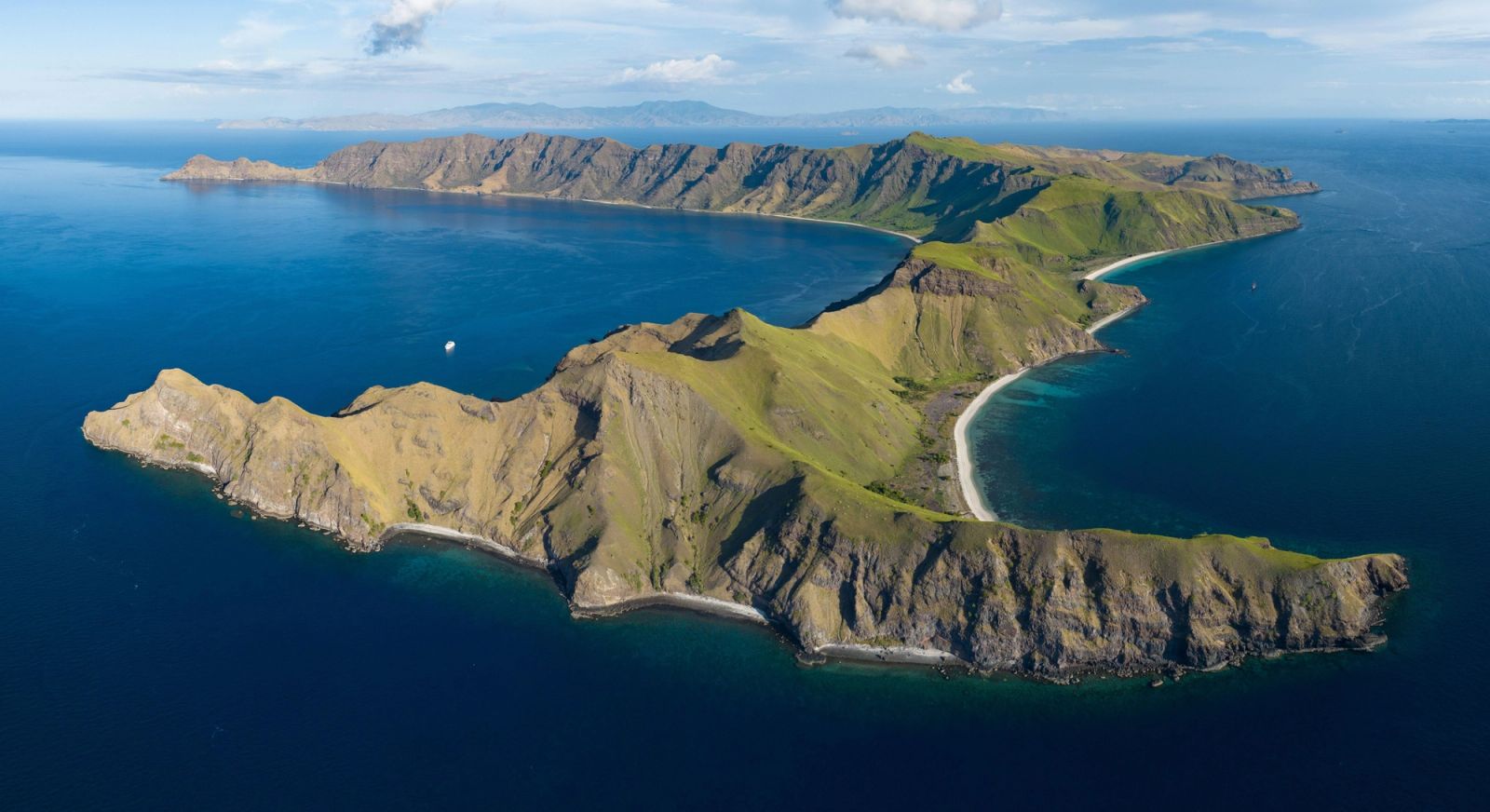
The islands themselves carry an otherworldly quality. Open savannah hillsides, wind-carved ridges, and bone-dry terrain in shades of gold and ochre give the landscape a Jurassic authority. Komodo dragon encounters on Rinca and Komodo Island, the unmistakable pink sand of Pink Beach (its color comes from a tiny marine organism called foraminifera, mixed into the coral sand), and the spectacle of thousands of flying foxes erupting from Kalong Island at dusk: each is a Komodo experience that has nothing to do with diving.

The three bays of Padar Island at sunrise, Komodo's signature view.
02

What Makes Komodo Unmistakable

Most major dive destinations are built around one signature experience. Komodo delivers four. The drift dives through Rinca's channels, the manta aggregations at Manta Point and the Cauldron, the macro wonderland of the southern sites, and the topside drama of the dragons. Each one alone would justify an itinerary.

The currents are the engine of everything. Cold upwellings from the deep Indian Ocean collide with the shallower, warmer Flores Sea between the islands. The temperature differential creates plankton blooms that feed the entire food chain, from zooplankton up to manta rays filtering surface water on incoming tides. Dive at the wrong tide and a site is empty. Dive at the right moment and a single dive can move from manta rays to sharks to octopodes to passing pelagics, the kind of sequence that would feel scripted in a David Attenborough documentary.

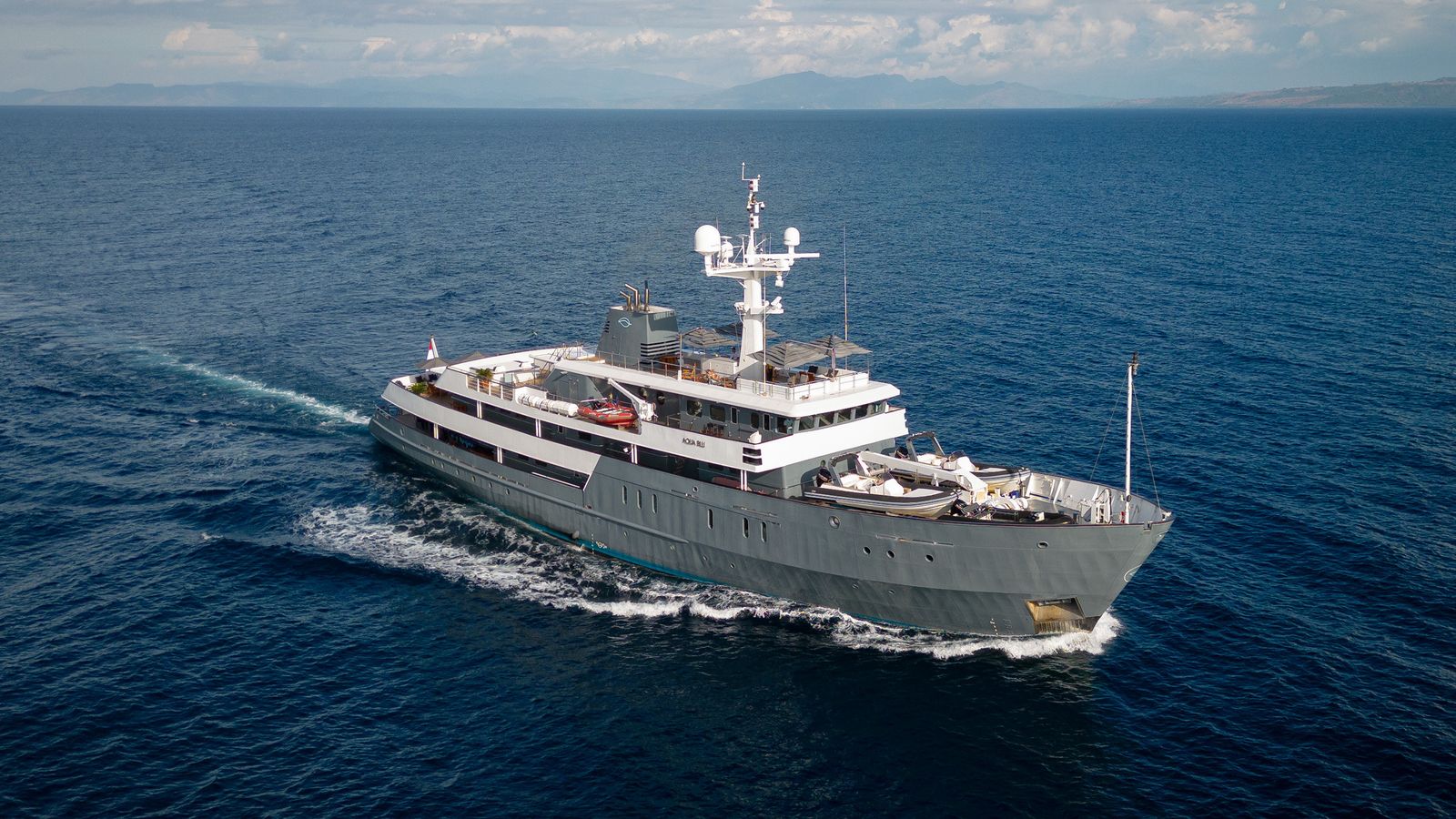
The park encompasses three major islands (Komodo, Rinca, and Padar) plus 26 smaller islets. A private yacht is the only way to move between them at will, anchoring in remote bays overnight, timing morning dives to the tidal charts, and finding the beaches and viewpoints that day-trip boats never reach.


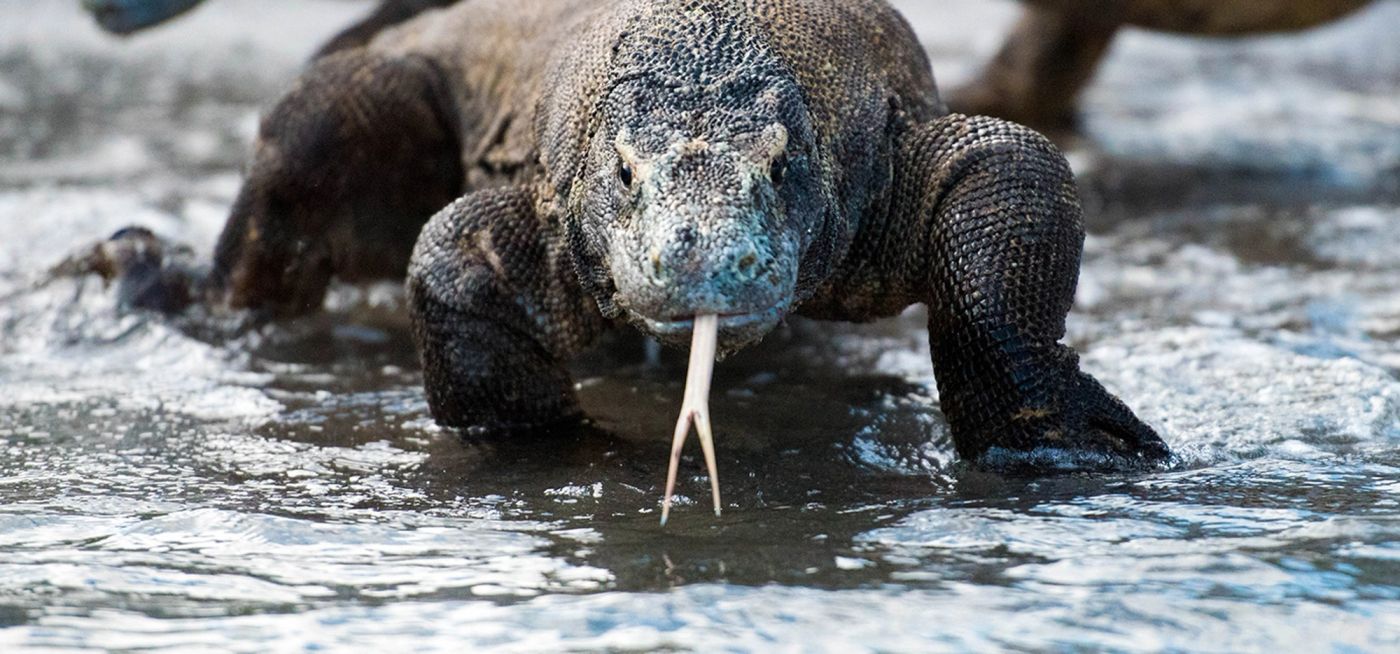
A Komodo dragon on the dry savannah of the park's islands.
03

Beyond the Reef

Komodo's topside experiences rival its diving in drama and variety. Western science first encountered the Komodo dragon in 1910, and a 1926 expedition to find the animals provided the inspiration for the 1933 film King Kong. Today, guided treks on Rinca and Komodo Island deliver close, safe encounters with the world's largest living lizard in its open savannah habitat. Early morning is best, while the air is still cool and the dragons are most active.

Pink Beach is one of only a handful of pink-sand beaches in the world, its distinctive hue derived from those same foraminifera mixed into the coral sand. Snorkeling directly off the beach reveals healthy reef at shallow depth, making it an ideal stop for mixed groups. Padar Island's summit hike rewards with arguably the most photographed view in Indonesia: three contrasting bays laid out below like a geographical triptych.
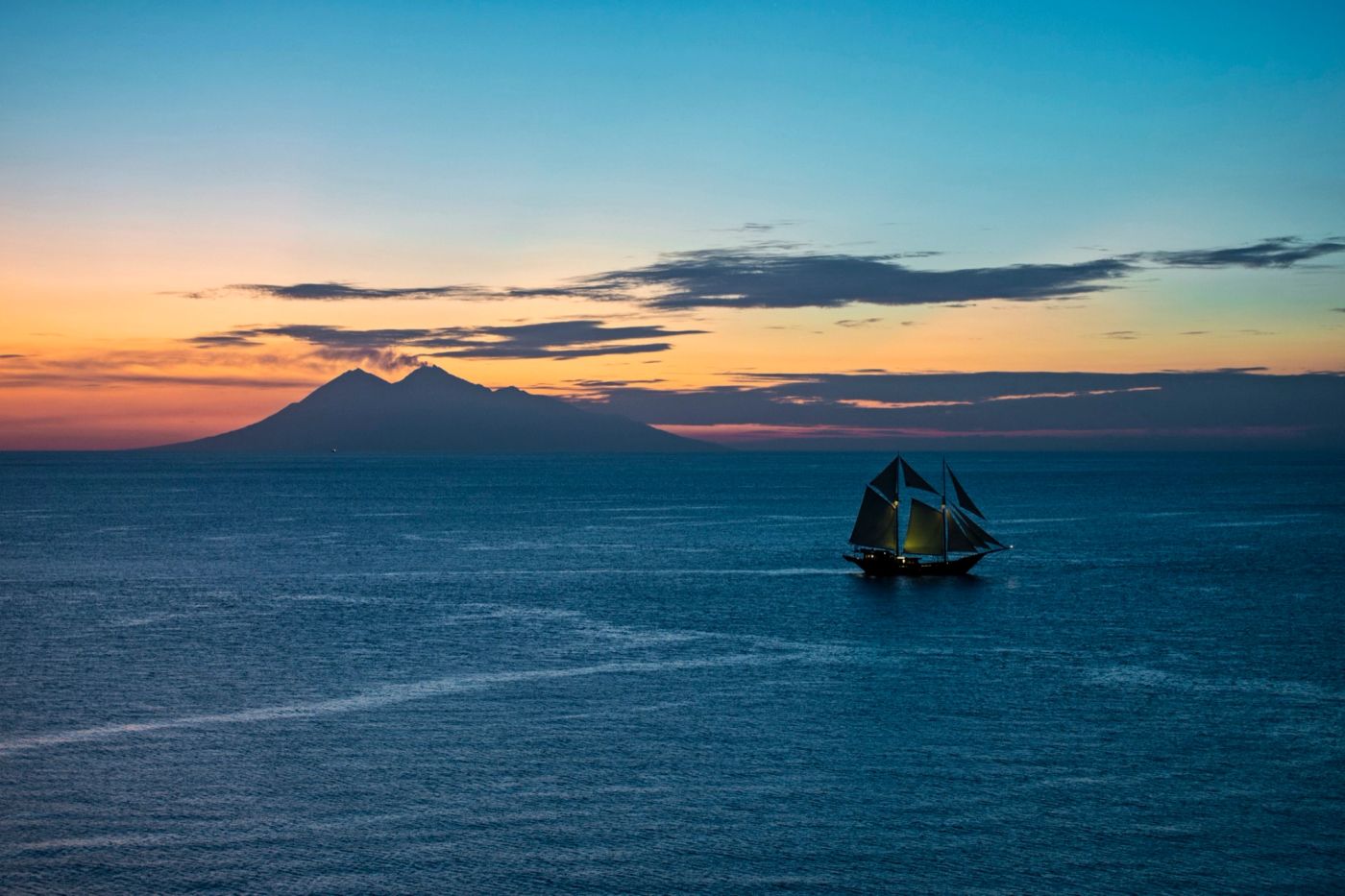
At dusk, the mangrove island of Kalong erupts with a mass exodus of flying foxes. Thousands of large fruit bats launch from the trees in a spectacle that takes a full half-hour to clear. Witnessing this from a yacht deck at anchor, sundowner in hand, is a Komodo experience that has nothing to do with diving.

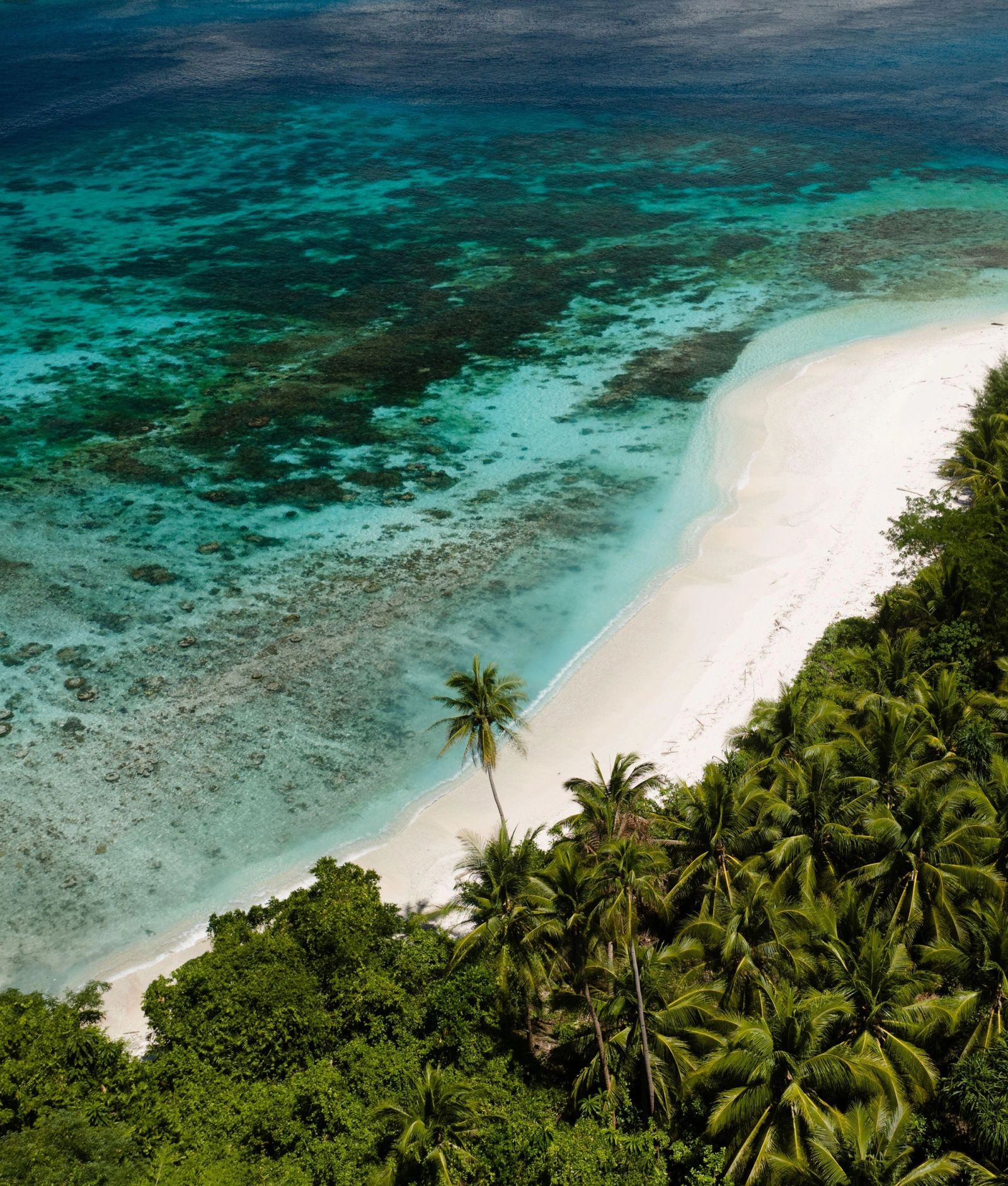
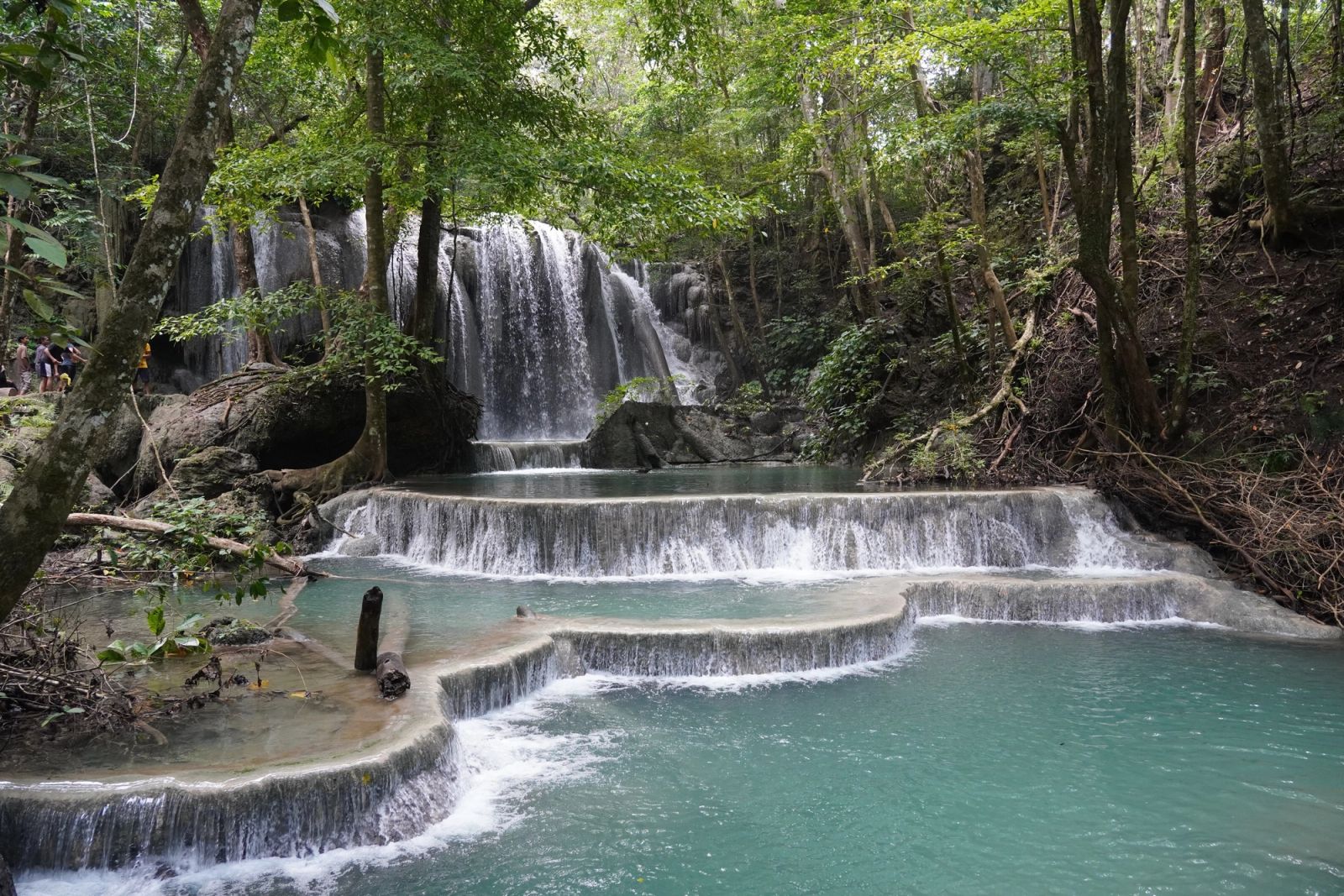
A green island ringed by mangroves and turquoise reef among Komodo's bays.
Sub-Regions

Three Zones, Three Characters

Komodo's dive sites divide broadly into three geographic zones, each with its own personality, current regime, and signature marine life. A well-planned 7-10-night itinerary typically covers all three.

Northern Zone

Northern Zone

Batu Bolong & Central Park

The park's headline dive sites cluster around the central islands. Batu Bolong's seamount delivers one of the most fish-dense dives in the Coral Triangle. Castle Rock and Crystal Rock draw schooling barracuda and grey reef sharks on every visit. Manta Point (Karang Makassar), the park's famous manta cleaning station, lies on the central reefs as well.

Batu Bolong Castle Rock Crystal Rock Shotgun Manta Point
Southern Zone

Southern Zone

Manta Alley & The South

The southern bays are colder, nutrient-richer, and home to Komodo's resident manta population. Manta Alley, the south's own cleaning station, delivers reliable encounters. The macro life here (frogfish, nudibranchs, sea apples) ranks with anything in the Indo-Pacific.

Manta Alley Cannibal Rock Yellow Wall Torpedo Alley
Eastern Zone

Eastern Zone

Tatawa & The Eastern Islets

The eastern fringe offers calmer conditions and more accessible reefs, making it ideal for first dives, check dives, and non-divers who snorkel. Tatawa Besar's healthy coral gardens and Siaba's turtle sanctuary are perennial favorites for mixed-ability groups.

Tatawa Besar Siaba Besar Taka Makassar Mawan
Dive Sites

Komodo's Signature Dive Sites

Twelve exceptional sites across three zones: seamount pinnacles dense with fish, cold-water macro slopes, and open-ocean drift channels.

Northern Zone

Northern Zone

Batu Bolong

A solitary seamount rising from 40m, so densely colonized with fish that visibility can drop to a few meters inside the school. Consistently ranked among the top dive sites in the world.

Drift Advanced Pelagics
Northern Zone

Northern Zone

Castle Rock

A broad submerged plateau with boulders draped in soft coral. The resident white-tip and grey reef sharks make this one of the most reliably thrilling sites in the park.

Sharks Drift Intermediate
Southern Zone

Southern Zone

Manta Point

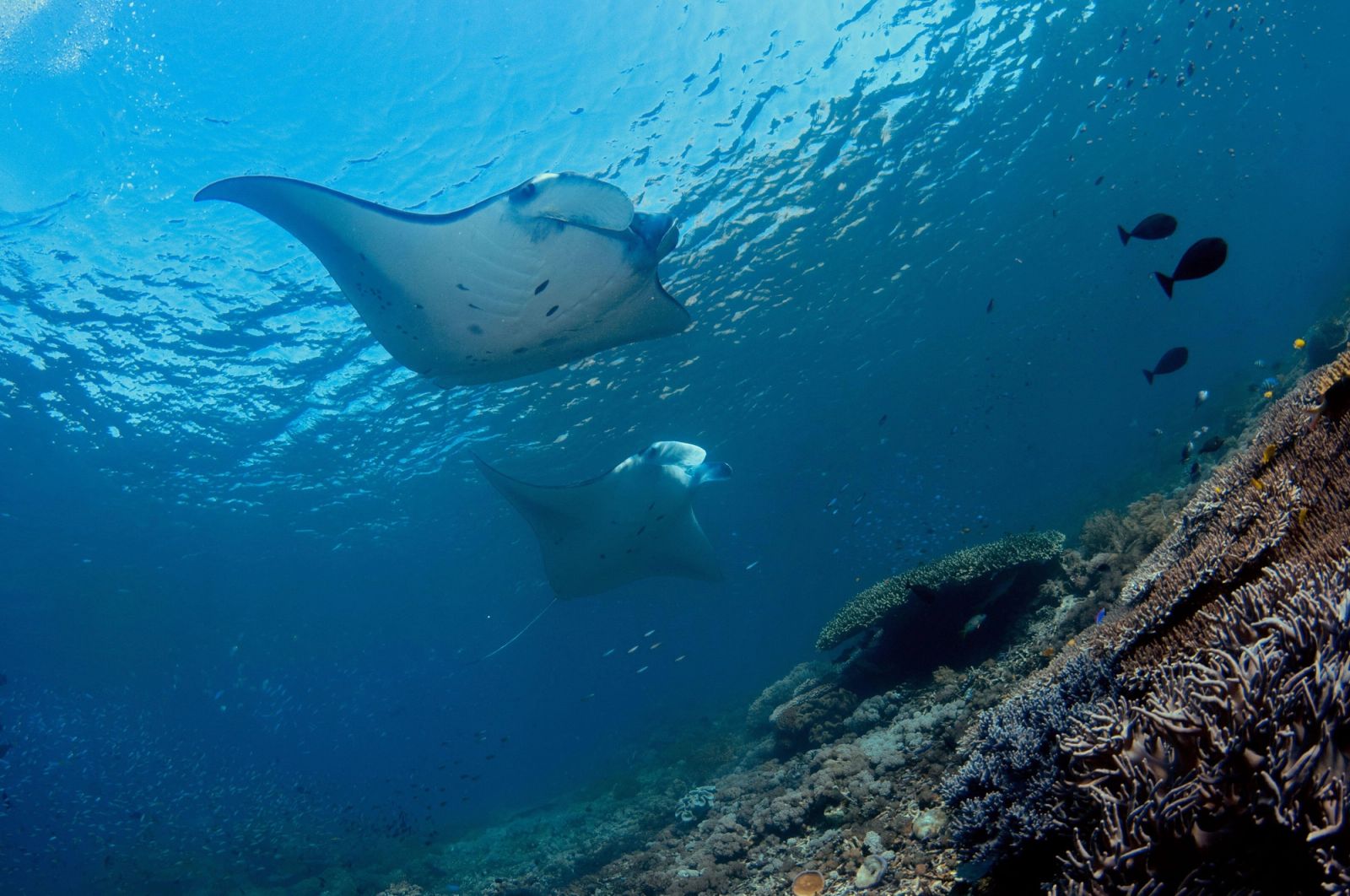
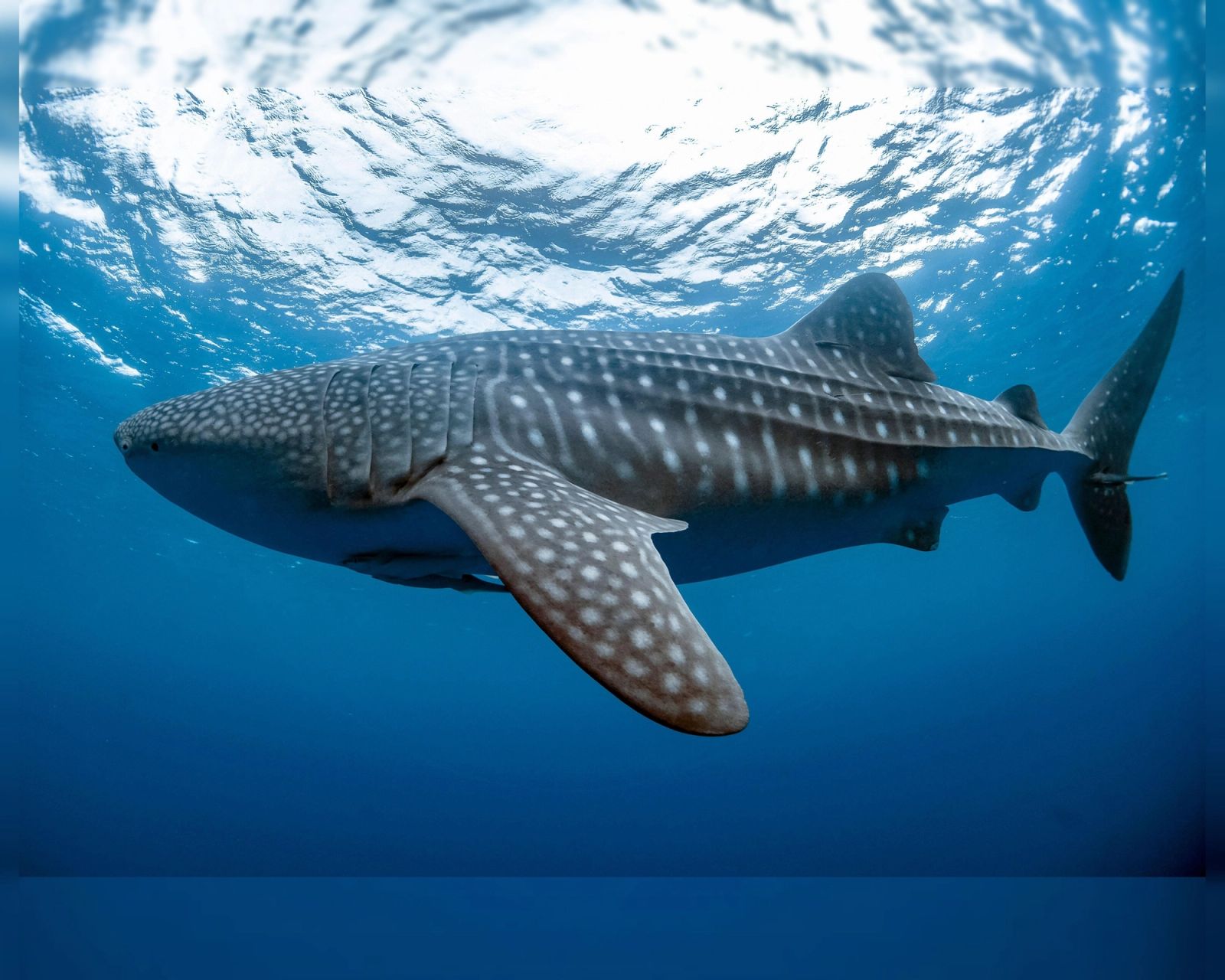
The park's most famous manta cleaning station. Reef manta rays queue in the current to be groomed by cleaner wrasse. Encounters are close, calm, and reliably frequent.

Manta Rays All Levels Snorkeling
Southern Zone

Southern Zone

Cannibal Rock

A macro stronghold: sea apples, nudibranchs, pygmy seahorses, frogfish, and ghost pipefish packed into every centimeter of the reef. Arguably the world's finest macro dive.

Cold Water Macro Intermediate

Marine Life

Komodo's Resident Wildlife

Over 1,000 fish species, 260 coral species, and some of the most sought-after macro subjects in the Indo-Pacific, all concentrated in a park the size of a small province.

Mobula alfredi

Reef Manta Ray

Mobula alfredi

Year-round residents at Manta Point and Manta Alley. The cold upwellings create the plankton blooms that sustain Komodo's permanent manta population.

Varanus komodoensis

Komodo Dragon

Varanus komodoensis

The world's largest living lizard, found only on Komodo, Rinca, Flores, and two minor islands. Guided treks deliver close, safe encounters.

Hippocampus bargibanti

Pygmy Seahorse

Hippocampus bargibanti

Masters of camouflage living on seafans in depths of 15-30m. Komodo's cold-water southern sites are among the most reliable locations to find them.

Chelonia mydas

Green Sea Turtle

Chelonia mydas

Siaba Besar hosts one of the park's most reliable turtle aggregations. Resident animals often seen resting on sea fans or grazing on seagrass meadows.

Nudibranchia

Nudibranchs

Nudibranchia

Komodo's rich currents feed a wide range of nudibranchs, from Chromodoris to Nembrotha, found on reefs across the park.

Caranx ignobilis

Giant Trevally

Caranx ignobilis

Hunting in coordinated packs through the current-swept sites of the north zone, one of the most dramatic behavioral spectacles in Komodo's waters.

The Numbers

  • 1,000+ Fish species within the park
  • 260 Coral species documented
  • 3,000+ Komodo dragons estimated population
  • 29 Islands within the national park
  • 60% Dive sites also suitable for snorkeling

From the Charter Team

Know Before You Sail

Practical notes for a Komodo charter.

Dive the North on Incoming Tide

Dive the North on Incoming Tide

Batu Bolong and Castle Rock only perform on specific tide windows. The captains plan the entire daily schedule around tidal timing. Arrive at the wrong moment and you'll find an empty rock instead of Komodo's most famous fish concentration.

Dragon Treks Are Better at Dawn

Dragon Treks Are Better at Dawn

Komodo dragons are ectothermic. They warm up on rocks in the early morning and are reliably active before 9am. Arriving at Rinca before the day-trip boats also means near-solitude on the trails. We anchor overnight to make early starts possible.

Bring a Wetsuit for the South

Bring a Wetsuit for the South

The southern cold-water sites run 18-22°C even in peak season. Cannibal Rock and Yellow Wall reward serious macro photographers who wear the extra layer. The species density here exists only because of those nutrients. A 5mm suit is not excessive.

Anchor at Kalong for Dusk

Anchor at Kalong for Dusk

The flying fox exodus from Kalong Island's mangroves at sunset is one of Komodo's most underrated experiences. Anchor nearby by 4:30pm and watch from the upper deck as thousands of large fruit bats pour out of the trees for up to 45 minutes.

Padar Sunrise Requires a 4am Start

Padar Sunrise Requires a 4am Start

The Padar viewpoint, Komodo's most photographed location, faces east. The sunrise view across three contrasting bays requires climbing the 45-minute trail before first light. We anchor overnight below the peak and wake guests before dawn to make it happen.

Pink Beach Snorkeling Is Underrated

Pink Beach Snorkeling Is Underrated

Pink Beach is famous for its sand. Fewer guests realize the reef immediately offshore is excellent for snorkeling. We arrive early before the day-trip boats for uncrowded beach time and then move directly to a dive site on the same tide window.

When to Go

Komodo's Season Guide

Month Conditions Visibility Mantas
January Moderate 8-15m Medium
February Moderate 10-20m Medium
March Moderate 8-15m Medium
April Good 15-22m High
May Excellent 20-30m High
June Excellent 20-30m High
July Excellent 20-30m High
August Excellent 20-30m High
September Excellent 20-28m High
October Excellent 18-25m High
November Building 12-20m Medium
December Challenging 8-15m Medium

Season: April through October

The southeast trade winds create calm, clear conditions across the park. Visibility reaches 20-30m at most sites, sea temperatures range between 22-28°C (the cold southern sites run cooler), and the Komodo dragons are highly active in the dry heat. This is the window for the most reliable manta encounters at Manta Point and the best drift-diving conditions at Batu Bolong and Castle Rock.

July and August are the busiest months in the park.

Shoulder & Off-Season: November through February

The northwest monsoon brings increased swell, reduced visibility at some sites, and higher rainfall. The southern dive sites (Cannibal Rock, Yellow Wall, Torpedo Alley) tend to remain accessible throughout, and are often clearer during this period due to upwellings. Marine life does not disappear in the wet season. Conditions are simply less predictable.

For macro divers specifically, November through January can be outstanding on the southern sites. Rates are lower, and the park sees significantly fewer day-trip visitors.

A Note on Wet Season Diving

Komodo's off-season is not a closure. Liveaboards operate year-round, and the southern cold-water sites at Cannibal Rock and Yellow Wall are often among the clearest in Indonesia during November and January due to increased upwelling activity. We can run Komodo charters in every month of the year. The itinerary and site selection simply adjusts to conditions.

Travel Logistics

How to Get to Komodo

From Bali (DPS)

50 min , direct

From Jakarta (CGK)

2.5 hrs , direct

From Lombok (LOP)

45 min , direct (seasonal)

From Singapore (SIN)

4-5 hrs , 1 stop

From Sydney / Melbourne

8-9 hrs , 1 stop

Labuan Bajo

Labuan Bajo is a fishing town on the western tip of Flores, a 50-minute flight from Bali and a world away. Flores is largely Catholic, the vans are painted in colors borrowed from the Caribbean, the vegetation is drier, and the whole place has grown quickly in a few years after decades under the radar. The airport is close to the port, and the yacht's tender collects guests from the jetty within the hour. We meet every flight.

One-Way Routes

Komodo's geographic position makes it ideal for one-way itineraries. Popular routes connect Labuan Bajo with Lombok (5-6 nights via Sumbawa), Moyo Island (4-5 nights), or Sumba (5-7 nights). These routes allow guests to board and disembark at different airports without retracing.

LBJ airport Code · 10 min airport to Harbor · ~50 min flight from Bali

Read the full guide
"

Giant manta rays, sharks, dolphins, sea turtles and octopus. Sometimes all on the same dive. Time the tides just right and experience drift dives like nowhere else on earth.
Indo Yachts Charter Team

Questions

Komodo National Park FAQ

What is the best time to visit Komodo National Park?

April through October is the season, with calm seas, 20-30m visibility, and reliably active dragons. June through September brings the best conditions, and July and August are the busiest months. The quieter months of November through February still permit diving, particularly on the cold-water southern sites, which are often excellent in this period.
How much does a Komodo yacht charter cost?

Private Komodo charters typically range from $34,000 to $190,000 per week for the whole yacht, depending on yacht size, season, and itinerary. Every charter is a private, whole-yacht booking.

Do I need to be an experienced diver to enjoy Komodo?

Not at all. While Komodo has some of the most demanding drift dives in the world, many of its sites are suitable for snorkeling and beginner divers. Every charter itinerary mixes sites across all experience levels. Non-divers can fully enjoy the dragon treks, beaches, and topside experiences.

Is Komodo suitable for families with children?

Yes, with some planning. While children aged eight and older who are confident swimmers typically enjoy Komodo enormously, families with younger children or non-swimmers can still have a memorable trip. Siaba Besar's turtle snorkeling, the dragon encounters, and Pink Beach are all family-friendly highlights. Drift diving sites are reserved for certified adults.

FURTHER READING

Continue Exploring

Dispatches from the far corners of the archipelago. Yacht features, expedition reports, and the stories behind our most memorable charters.

Ready to explore Komodo?

Tell us your dates and interests.We'll craft a personalized itinerary for your Komodo voyage.