



Silolona proved the idea. Eight years later, her founder's son, newly trained as a naval architect, set out to refine it.
By 2010 Silolona had been sailing for six years, and Patti Seery knew her better than anyone: what worked, what guests used and what they didn't, where they gathered on deck and where they never went. She wanted a second boat, smaller and built for fewer guests on the same far routes. This time she would not be working from instinct alone. Her son Tresno had come home.
The Engineer
Tresno Seery was born in West Java and grew up partly on his mother's voyages. Summers, he says, meant being taken to remote corners of Indonesia. The family moved to Chicago when he was in first grade. He studied engineering and naval architecture in the United States, in Arizona, then moved to Maine, before returning to Indonesia at his mother's request.
Si Datu Bua, the Beloved Princess, was the first boat he designed and built.

Her name, the Beloved Princess, at last light.
What Changed
She was built by the same Konjo shipwrights as Silolona, and to the same Germanischer Lloyd standard. But Tresno has described the build as totally different. The lessons of the first boat went straight into the second: the best positions for the bedrooms, the best positions for seating, the way guests actually live aboard. Where Silolona had been made largely by eye, Si Datu Bua began on a naval architect's drawing board.
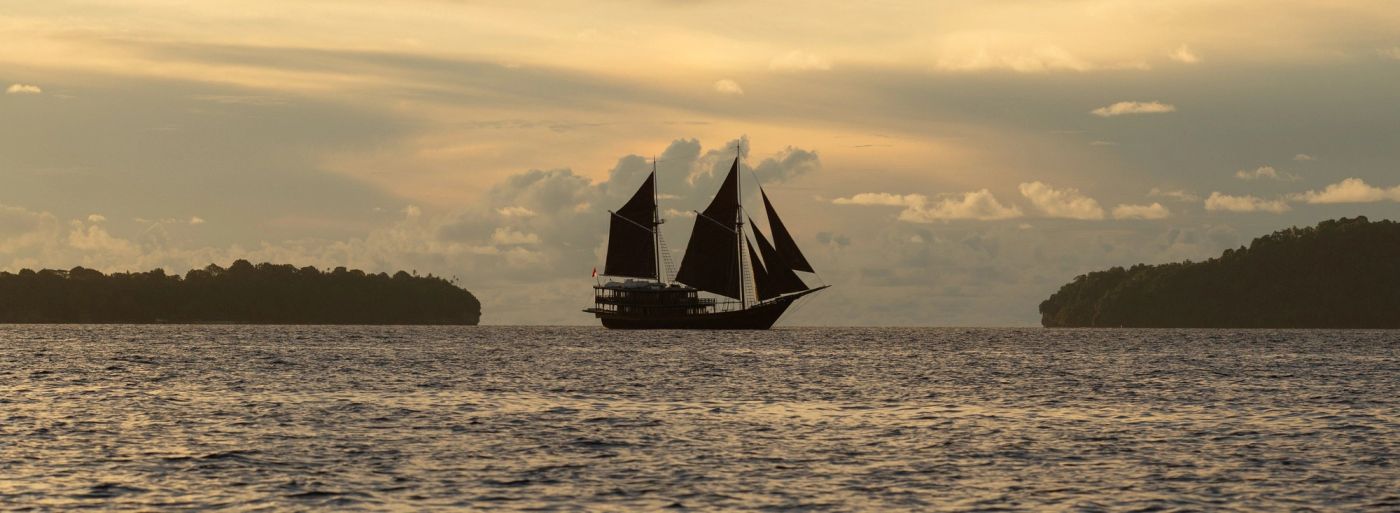
The result is a forty-meter phinisi with the discipline of a modern yacht. Her ironwood hull is classed to Germanischer Lloyd, a standard written for steel ships and earned by very few wooden phinisi. She is powered by a 500-horsepower Yanmar and cruises at ten knots, and she carries 426 square meters of red tanbark sail, 586 with the flying jib and fisherman set.
On board, it shows most in what you do not notice. She is quiet. She moves easily. The midships suite, placed where a naval architect would place it, is the steadiest cabin aboard. She feels like a superyacht in her systems and like a phinisi in everything you can touch.

The Banda cabin aboard Si Datu Bua.
Six Hours from Anywhere
The conditions were the opposite of the drawing board. Silolona had been built in Kalimantan, in a large boatbuilding area. Si Datu Bua was built six hours out of town, in a small village next to an old Japanese dock from the Second World War. Everything had to be brought in. Timber was cut up the mountain and carried down day by day, then hand-carved with basic tools. For most of the build there was no contact with the outside world.
Tresno has said he would not change it for anything, and that those conditions made him the boatbuilder he is. She was launched in July 2012.

Hand-carved, far from any road.
What Followed
Si Datu Bua was the start of a career. Tresno went on to found Outborn Watercraft, which builds the high-powered tenders that serve the family's boats and others, and new phinisi. Under his own design practice he drew the lines for two of the newest yachts in our fleet, Vela and Celestia, both built by hand on Sulawesi beaches to a naval architect's drawings, the method Si Datu Bua began.
She remains the family's own boat, run by the company his mother founded and he now leads. In 2026 she was named to TIME's list of the World's Greatest Places.

The family's own boat, kept the family's way.
Si Datu Bua is available for private charter through Indo Yachts. Her yacht page has her suites, seasons and itineraries.
Continue Exploring
Dispatches from the far corners of the archipelago. Yacht features, expedition reports, and the stories behind our most memorable charters.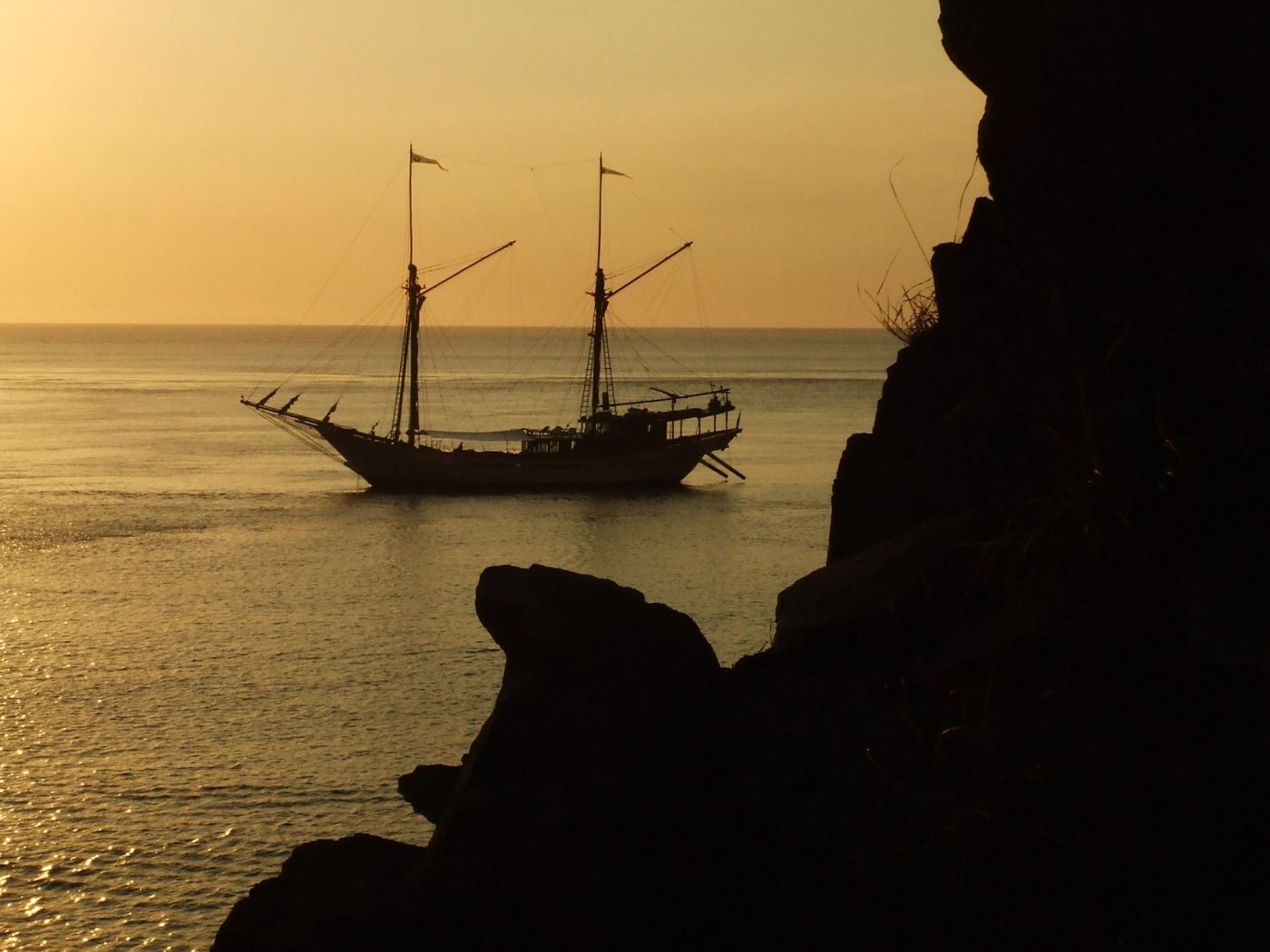
Practical Guides
Everything you need to know before chartering in Indonesia. From costs and logistics to destination comparisons and packing lists.
Inspired to explore?
Our team has sailed these waters for over a decade.Let us help you plan your own Indonesian adventure.