


Origins of the Phinisi
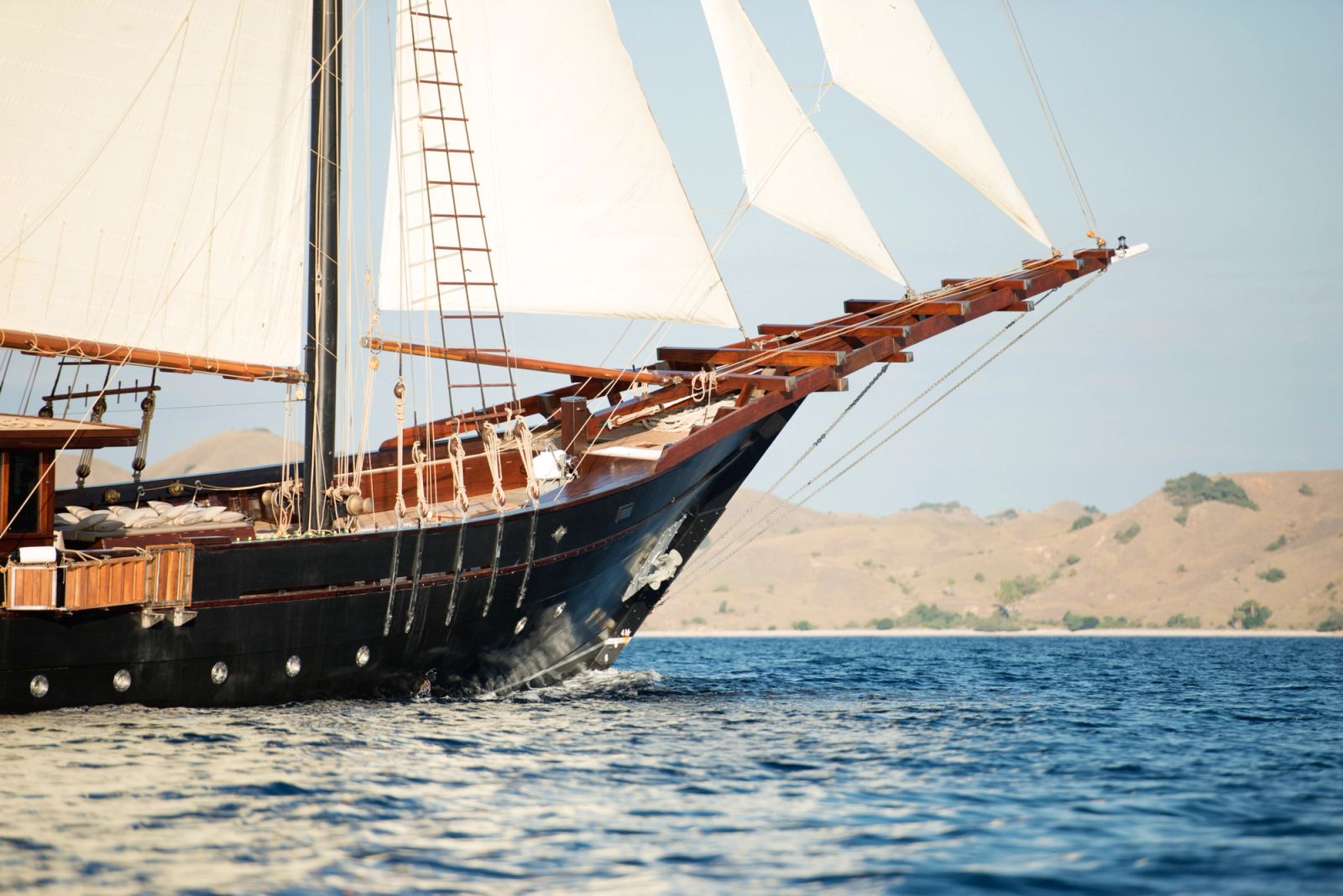
Long before Europeans reached Southeast Asian waters, the Bugis and Makassar people of South Sulawesi were accomplished shipbuilders and navigators. The phinisi, a two-masted sailing vessel, carries centuries of maritime knowledge handed down through generations of these communities.
Precise origins are hard to fix, because the Bugis passed their craft down by hand and by eye rather than in written records. Historical accounts place Bugis traders under sail throughout the Indonesian archipelago and well beyond it by the 14th century, working the monsoon routes that linked the Spice Islands to ports across the region.
The word "phinisi" is believed to derive from the Dutch word "pinnace," a type of small sailing ship. That etymology is a colonial reinterpretation, however. The Bugis shipbuilding tradition predates European contact by centuries.
Traditional Construction
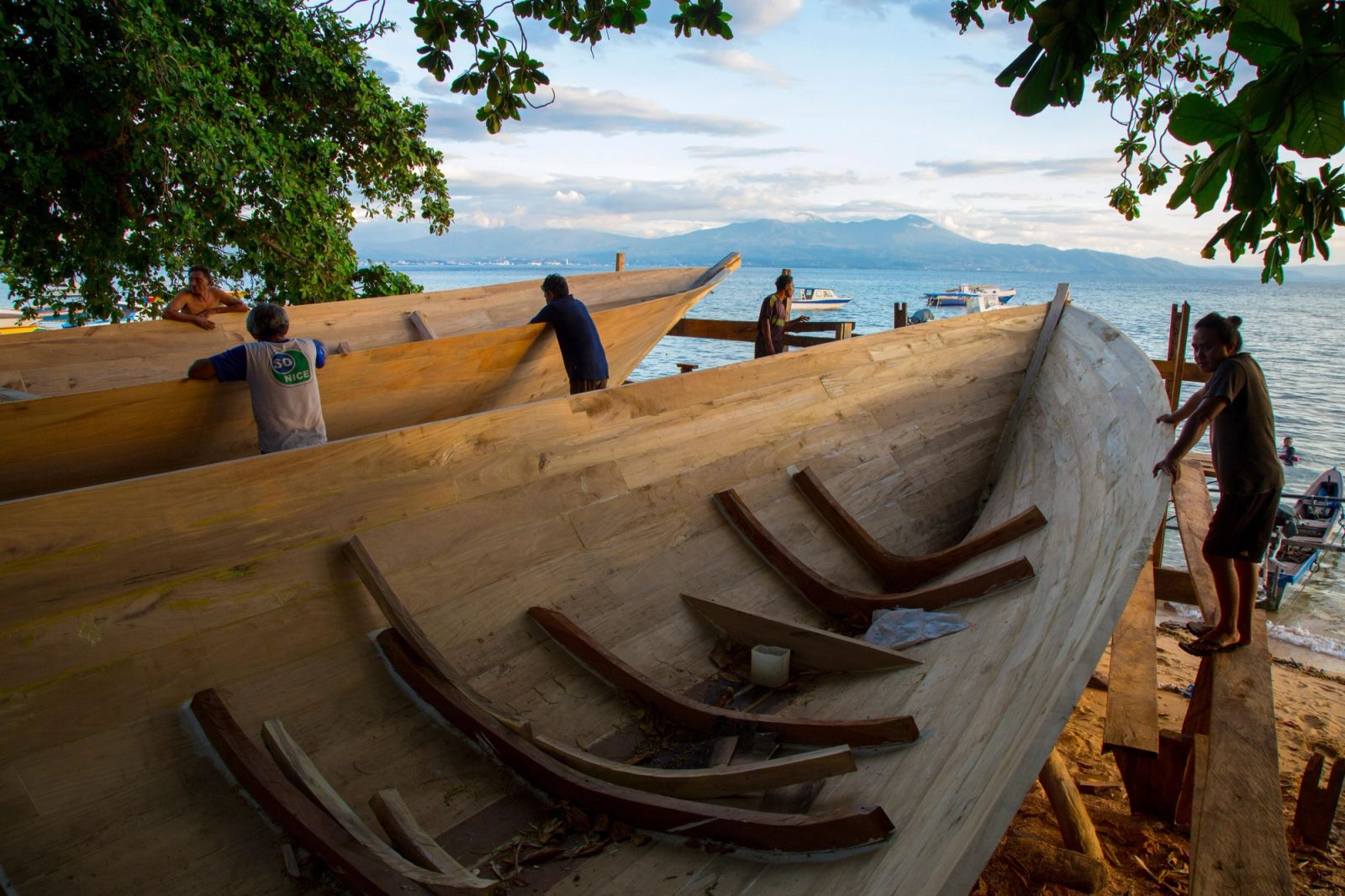
What sets the phinisi apart is how it is built. The largest traditional vessels still take shape without blueprints. A master shipwright, the punggawa, holds the lines in his head and judges every curve by eye, in a craft learned from his father and grandfather before him. In the village of Ara, where some families trace five generations of builders, that knowledge has produced some of the finest phinisis ever launched.
The hull goes together shell-first. Planks are fitted to one another before the internal ribs are set, the reverse of the European frame-first method, and each plank is shaped to sit fair against its neighbors. Ironwood, known locally as ulin, gives the hull its strength and rot resistance, though the largest timbers now travel down the rivers of Kalimantan, since trees of that size have grown scarce on Sulawesi.
When western designers began working alongside the Konjo builders on larger charter vessels, the two traditions met rather than displaced one another. On Dunia Baru, naval architect Michael Kasten introduced drawings and lofted mold frames so the hull could be engineered to international structural standards, while the shaping and joinery stayed in the hands of the Ara shipwrights.
The Bugis Seafarers
Few peoples have ranged as widely under sail as the Bugis. At their height their trading networks reached from Singapore to the coast of Australia, and their routes tied the spice islands of Maluku to ports across Southeast Asia. Their reputation traveled with them, and folklore even traces the English word bogeyman to the dread their raiders inspired.
That seafaring life shaped an entire culture. Young men went to sea before they married, and the most capable traders held high standing ashore. The tradition has not vanished. A short way along the same coast, in Ara and Tanjung Bira, builders are still laying keels by the methods their grandfathers used, and the last captains of the pure-sail generation still remember voyages made under canvas alone.
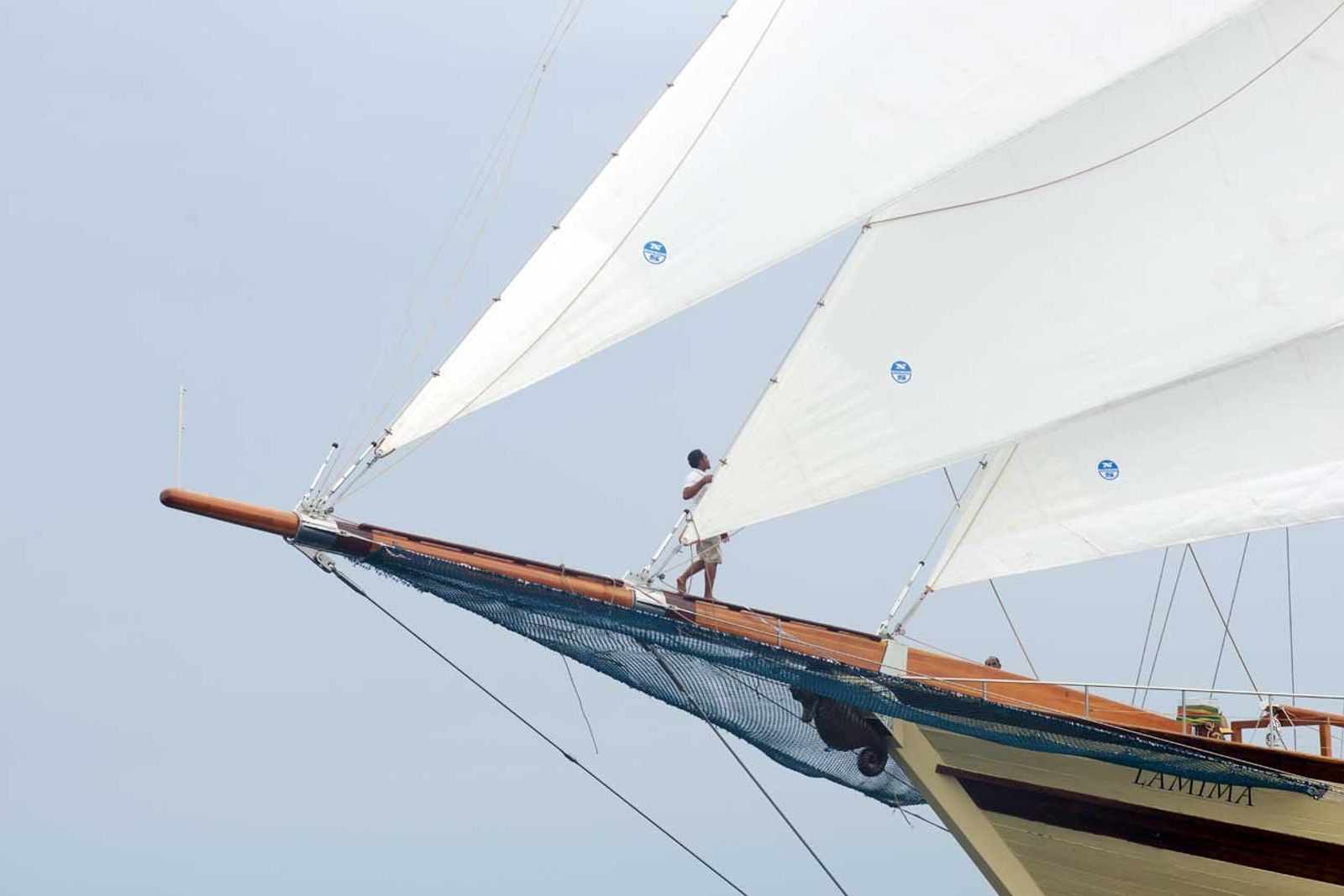
The rig that carried Bugis traders across half of Asia still stands on every true phinisi.
The Modern Charter Phinisi
Today's charter phinisi joins traditional craftsmanship to modern comfort. The distinctive hull and rig of its working ancestors remain, but below decks these are luxury yachts, with air-conditioned cabins, full galleys, and systems and safety equipment built to international standards.
The luxury phinisi is a recent idea. It was only in the early 2000s that anyone set out to build one of these working boats purpose-made for guests. The American Patti Seery is widely credited as the pioneer, with the 50-meter Silolona delivered in 2004. Her son Tresno, who trained in naval architecture, followed in 2012 with the 40-meter Si Datu Bua, built from timber cut deep in the Sulawesi jungle. A handful of owners since, Mark Robba's 51-meter Dunia Baru among the most ambitious, have shown how far the form can be carried.
Indonesian maritime law plays a quiet part in all of this. Cabotage rules require commercial vessels working in Indonesian waters to be Indonesian-flagged and majority Indonesian-owned. That framework, meant to protect the domestic maritime industry, has had the side effect of helping sustain traditional shipbuilding and the people who keep it alive.
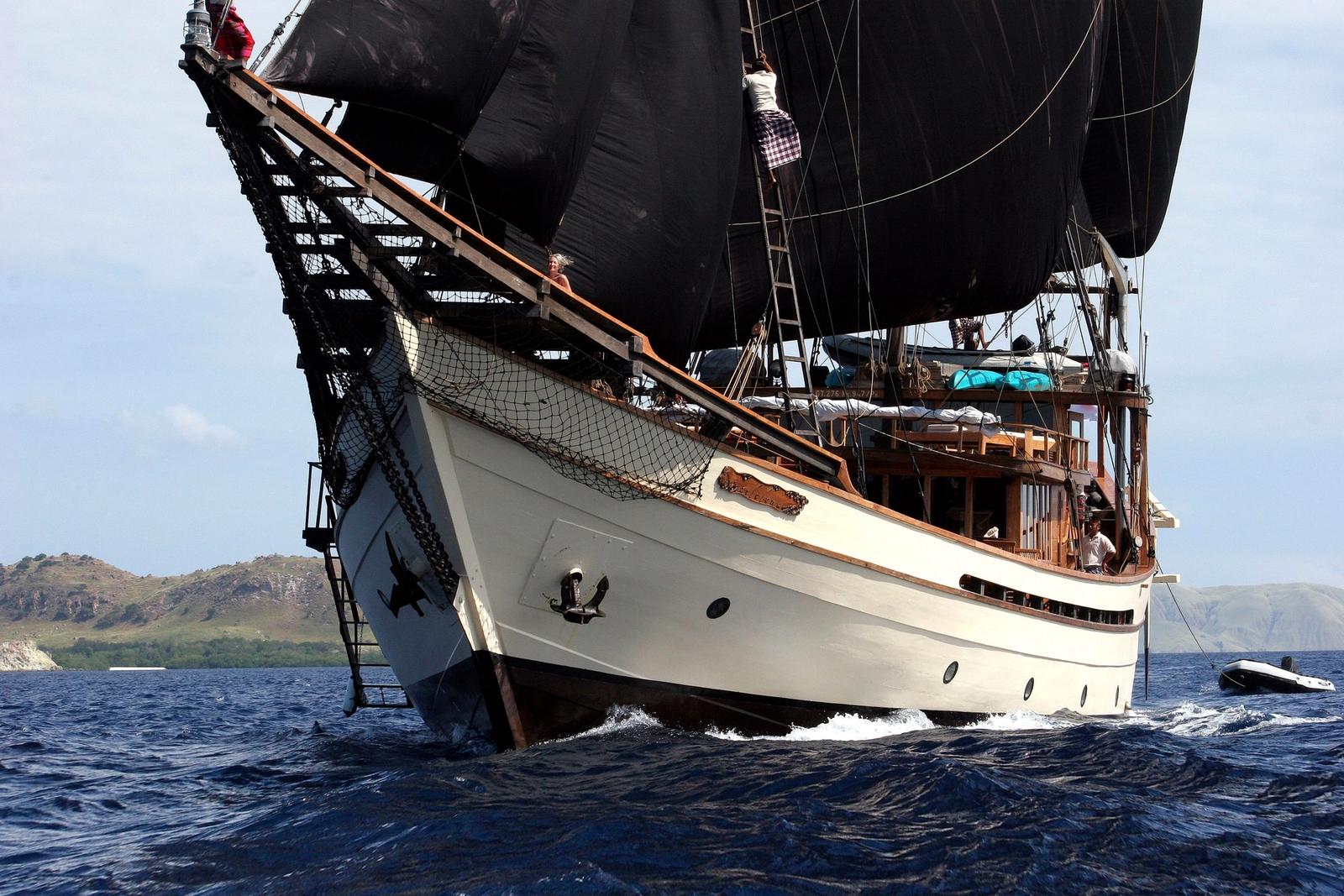
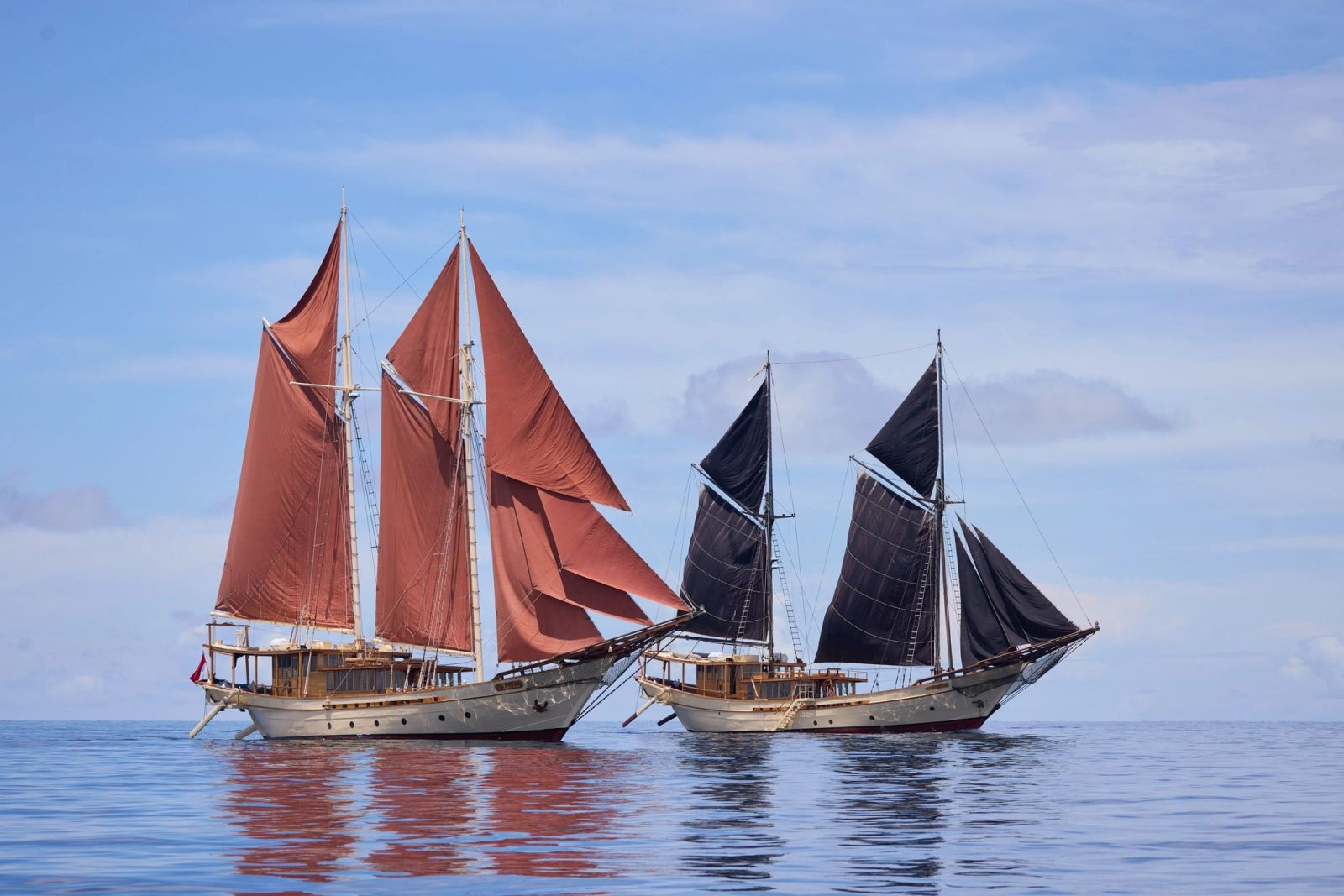
The same silhouette, now carrying guests instead of cargo.
A Living Legacy
In the yards of Tanah Beru, Bira, and Ara in South Sulawesi, master builders still raise phinisis by hand. UNESCO recognized what that means in 2017, inscribing the art of Sulawesi boatbuilding on its Representative List of the Intangible Cultural Heritage of Humanity.
The work is not only carpentry. A phinisi is brought to life through ceremony. When the keel is laid, the builders bore a navel through its center in the an'natta rite, and when the boat is finished another ceremony marks her birth. As one master shipwright puts it, a vessel that has not passed through these rituals cannot truly be called a phinisi at all.
When you step aboard a phinisi, you board more than a yacht. You step into a living tradition that connects you to centuries of maritime heritage. The wood beneath your feet was shaped by hands guided by generations of knowledge, using techniques that predate the arrival of Europeans in these waters.
Experience the Heritage
Every phinisi we represent carries this heritage forward. From the line of the hull to the rig that still stands on many vessels even where engines now do the work, these are working expressions of a tradition that has defined Indonesian seafaring for centuries. To sail one through Komodo or Raja Ampat is to travel waters the builders' ancestors knew, in a boat made the way theirs were.